Discover the must-see works at the Uffizi Gallery
If you’re an art lover, we’re sure you already know what you’re looking for. If, on the other hand, you’re interested in discovering more about the art world and seeing which works at the Uffizi Gallery are the most important, you’ve come to the right place. We’ll tell you which pieces you simply mustn’t miss at one of the world’s most important art galleries – it’s home to some real treasures!
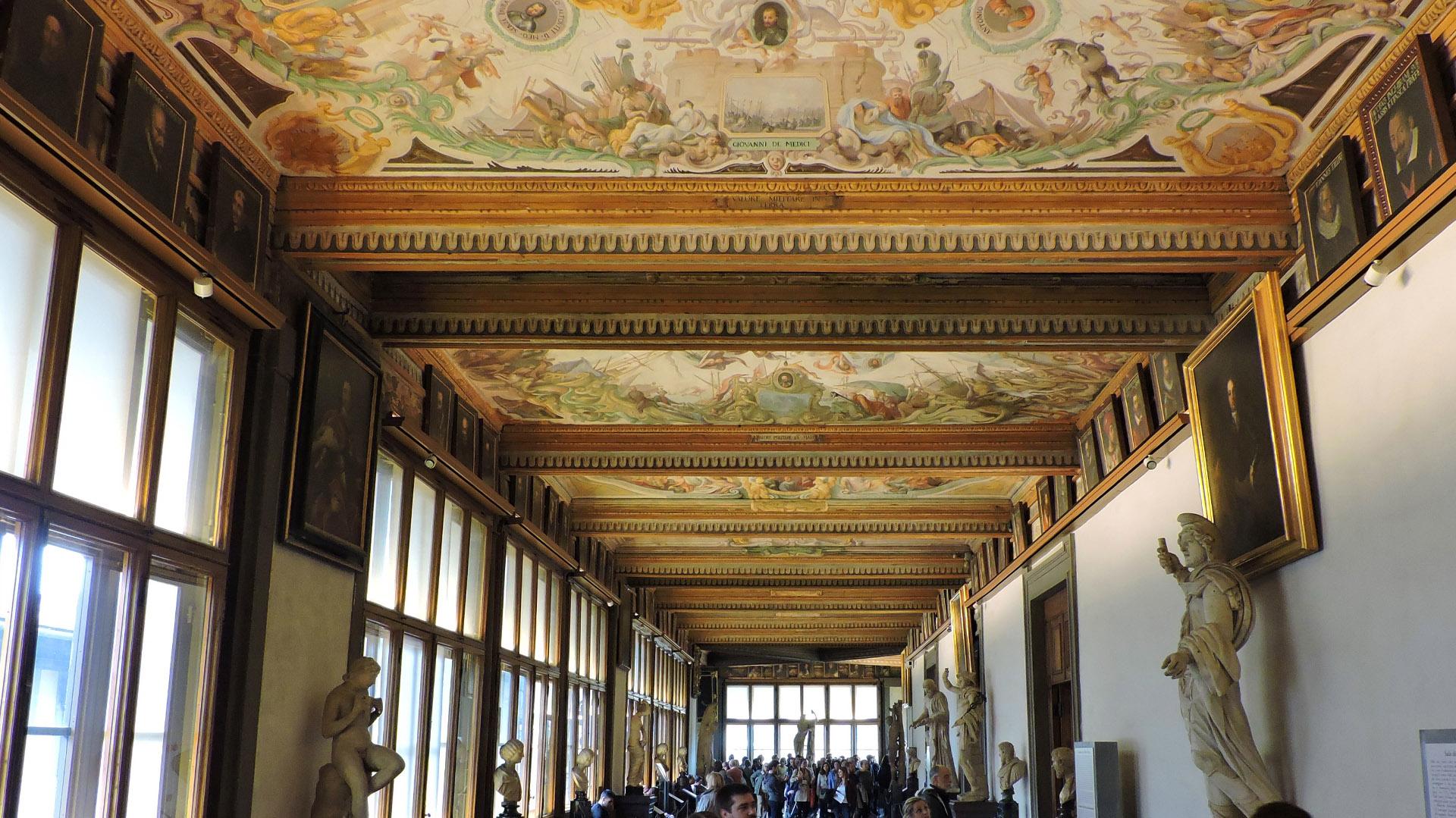
What artworks are there in the Uffizi Gallery? Here are the ones you simply mustn’t miss
If you’re an art lover, we’re sure you already know what you’re looking for. If, on the other hand, you’re interested in finding out more about the art world and seeing which works at the Uffizi Gallery are the most important, you’ve come to the right place. We’ll tell you which pieces you simply can’t miss at one of the world’s most important art galleries…it’s home to some real treasures!
The most important works in the Uffizi Gallery
Before we get into the details, the Gallery has several exhibition rooms, arranged chronologically, displaying works ranging from the 13th to the 18th century. However, the Italian Renaissance …is the museum’s most representative period, but you’ll also find works from the The Middle Ages, Gothic, Mannerism and the Baroque. Now, without further ado, here are the most important ones.
The Birth of Venus, Sandro Botticelli
Undoubtedly one of the most important works in the Uffizi Gallery – and indeed in the world. Painted between 1484 and 1486, it depicts Venus emerging from the sea on a shell, driven by the winds of Zephyr and waiting to be cradled by Ora. The painting is a declaration of the ideals of the Renaissance: proportion, harmony and the revival of classical mythology. It was revolutionary not only for depicting a mythological scene, but also for showing a nude figure outside the context of a religious representation.
The Spring, Sandro Botticelli
Another masterpiece by Botticelli, this painting is brimming with symbolism. Here we see Venus as the central figure, surrounded by mythological characters such as the Three Graces and Zephyr, who also appears in The Birth of Venus. It is a a celebration of nature, of love and rebirth.
The Annunciation, Leonardo da Vinci
Among the works at the Uffizi Gallery there is also one by this genius, and it is believed to be one of his earliest commissions. The Annunciation depicts the Archangel Gabriel and the Virgin Mary at the moment of the Annunciation. It stands out for being a scene depicted outdoors…when it was typically set indoors, due to the meticulous details and for the use of the perspective…an early example of Da Vinci’s genius.
The Madonna of the Goldfinch, Raphael
This painting, created by Raphael during his youth… it depicts the Virgin Mary with the Baby Jesus and St John the Baptist. The harmony of the composition and the tenderness of the figures reveal why Raphael is considered one of the great masters of the High Renaissance.
We cannot overlook a curiosity of this painting. It was a wedding gift from Raphael to Lorenzo Nasi, and in 1548, an earthquake destroyed Nasi’s house and the painting was divided into seventeen parts. According to Giorgio Vasari (the architect of the Uffizi Gallery), the fragments were recovered and handed over to Battista, Lorenzo’s son, for restoration. The damage can still be seen in the painting today!
Tondo Doni, Michelangelo
This is one of the most important works in the Uffizi Gallery, as it is the the only easel painting by Michelangelo that has survived to this day. It is a a circular painting depicting the Holy Family… with a background full of nudes reminiscent of the frescoes in the Sistine Chapel. The dynamism of the figures and the use of colour are striking; the frame of the work was also created by Michelangelo himself.
The Medusa, Caravaggio
Caravaggio, the genius of chiaroscuro, adds a dramatic touch to the collection with this painting on a shield. The severed head of Medusa, with lifelike eyes and a mouth agape in a scream, captures the very moment of horror. The chiaroscuro technique shines in all its splendour and sends a shiver down your spine just looking at it.
Diptych of the Duke of Urbino, by Piero della Francesca
The work stands out both for its technique and its conceptual depth. This diptych depicts Federico da Montefeltro and Battista Sforza in profile portraits, as if they were figures on a Roman coin. The choice of profile is no coincidence: Federico had lost his right eye in battle, which is why he was always depicted from his left side.
Venus of Urbino, by Titian
Titian presents us with a nude woman, reclining naturally, who looks directly at the viewer. Her pose is neither one of modesty nor passivity: she is aware of her beauty and of the power she wields with her gaze. This Venus is not mythological like the one we have seen by Botticelli; this is a real woman in her own home, a declaration of femininity as an aesthetic ideal, beyond mythology.
The Adoration of the Magi, by Gentile da Fabriano
This altarpiece, rich in gold and intricate details…it is one of the most dazzling examples of the Gothic international. The Adoration of the Magi, painted in 1423, is striking both for its narrative complexity …as much for its splendour. Gentile does not merely depict the arrival of the Magi: tells the whole story of the trip…integrating scenes into a single continuous space.
Judith Beheading Holofernes, by Artemisia Gentileschi
Few works in the Uffizi Gallery evoke such a visceral reaction as this one. Artemisia Gentileschi, one of the few female painters recognised in her time… she imbues this scene with an extraordinary intensity. Judith, together with her maid, immobilises and beheads the Assyrian general Holofernes with a determined and fierce expression. Unlike other depictions of the same subject, here the violence is not softened; on the contrary, it is shown with raw intensity and determination.
Bacchus, by Caravaggio
Finally, one cannot discuss the great works of the Uffizi Gallery without pausing to consider *Bacchus*. It depicts the god of wine in a thoroughly earthly, rather provocative manner. The young man is shown crowned with vine leaves, his cheeks flushed – no doubt from the wine – and bringing the chalice closer to the viewer, as if inviting them to share in the pleasures with him.
We could go on for hours talking about the best works in this art gallery… but we think it’s best for you to discover them for yourself; you certainly won’t regret it. buy tickets for the Uffizi Gallery …and enjoy these and many other masterpieces of their time.